A recipe manager for cooking robots — it speaks Thermomix — and a
cookbook you can actually search. Recipes are indexed by preparation and
total time, by ingredients you do or do not want in them, by course, by
kind of preparation, by dietary profile, by season and by origin, with
favourites bookmarked. Pick a few and it builds the shopping list.
Pages are print-friendly and the whole book exports to a static offline
copy.
A beep player small enough for a micro-controller with nothing but a
buzzer on a PWM pin. It comes in two halves. The encoder, on the desktop,
reads a CSV of frequency and duration or a line of beep
commands and emits a C byte array — working out the tempo, or a fixed unit
length, so the tune packs down as small as it can. The player, on the
device, walks that array: a handful of opcodes for end-of-stream, tempo and
note, and a melody costs a few dozen bytes of flash.
An LDAP object mapper for Ruby: a directory entry becomes a Ruby object
and back again, with the mapping declared on the class — which branch to
search, which filter, which attributes, and how each one is read and
written. It is meant to be used with
dry-struct, so the
mapped object is a typed structure rather than a bag of strings.
A ports options and dependency configurator for FreeBSD, replacing what
poudriere options -C does: that walks the dependency tree one
port at a time and pops an interactive dialog for each. Optique scans the
whole dependency closure in parallel — about a thousand ports in under a
minute cold, and well under a second warm, from a persistent cache —
presents a single interface over all of them, and writes every options
file in one atomic pass at the end. It knows both the poudriere and the
synth layouts.
A do-it-yourself water-leak breaker built around a Raspberry Pi. It
watches household water usage and can shut the main supply through a
solenoid valve, so a leak does not become water damage. Everything is
driven over MQTT, so it joins an existing
home-automation setup — Home Assistant, Node-RED — without locking the
house into a proprietary cloud.
The three Moses programs
Program
Role
moses_watermeter
reads the water meter, over M-Bus or by counting GPIO pulses
moses_breaker
opens and closes the solenoid valve through a relay
moses_sensors
reads the optional BME280 — temperature, pressure, humidity
Parameter processing for the Sinatra
framework. One declarative call expresses the whole chain a request
parameter usually goes through: required or optional with a default,
type checking and coercion, retrieval of the object it names, and any
further conversion through a block. It sits well with
dry-types and Sequel —
or an LDAP object mapper such as LOM — while depending
on none of them.
Provides access to Linux GPIO, SPI and I2C using the same kind of API that
can be found for micro-controllers, which is what makes porting a vendor
driver to Raspberry Pi user space straightforward. It goes through Linux
ioctl for portability and performance (no devmem, no sysfs).
Toggle a reset pin and run an SPI transferexample.c
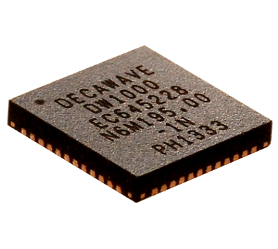
A driver for the DW1000, a wireless transceiver based on ultra-wideband
techniques, which allows cost-effective indoor and outdoor positioning.
It was written so that a network protocol built on top of it has the same
consistent behaviour — and the same bugs — on every platform: Zephyr,
ChibiOS, MyNewt, Crazyflie, and Linux through the
bitters library. Supporting another platform means
implementing a small API for delays, GPIO toggling and SPI transfers.
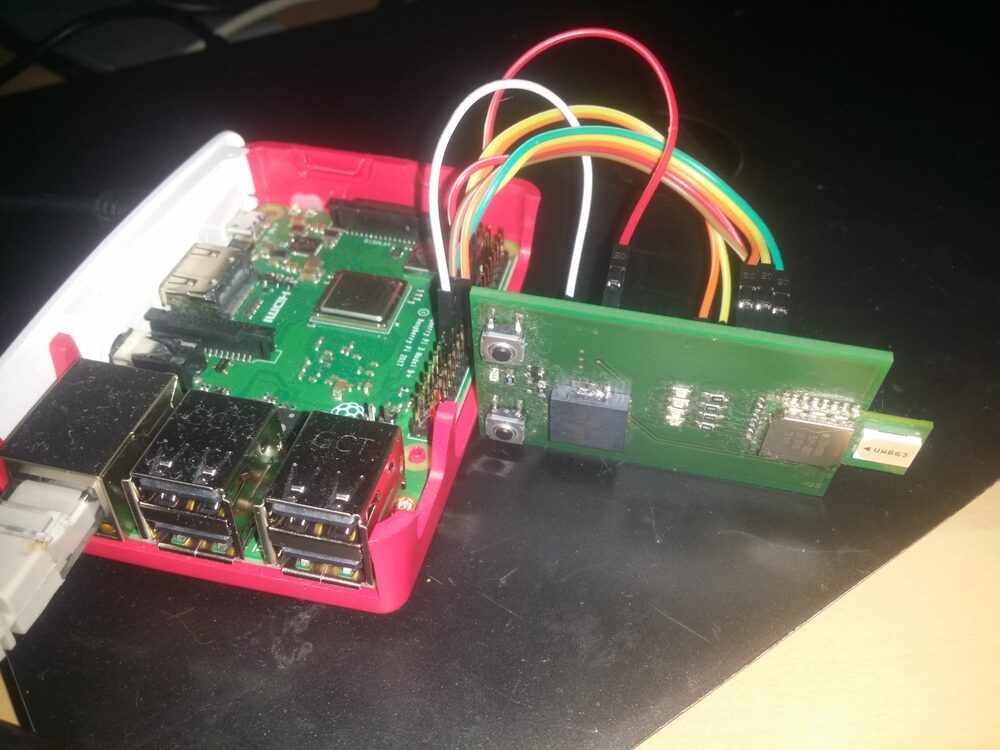
Turns a Raspberry Pi into an ultra-wideband sniffer, leveraging the
bitters library and the
DW1000 driver to talk to the chip. Received
UWB packets are forwarded to the Ethernet interface, so they can be
processed and dissected with
tcpdump or
wireshark. They go out under their
own ethertype, so a capture on the desktop is a single filter away:
tcpdump ether proto 6666.
Capture UWB channel 5 and read the frames back over EthernetOn the Raspberry Pi
# Sniffing UWB packets on the RPI and forwarding them to Ethernet network
#
# UWB chip is tuned for capturing on channel 5 with a 6.8Mb/s baudrate
# and preambule code 10.
#
uwb-sniffer -i eth1 -P 6666                                 \
    -c 5 -b 6800 -p 64                                      \
    --tx_pcode 10 --rx_pcode 10 --tx_plen 128 --rx_pac 8
On the desktop
# Analysing received packet on the desktop environment
# (it is better to use wireshark that tcpdump)
#
tcpdump ether proto 6666 and ether src aa:bb:cc:dd:ee:ff
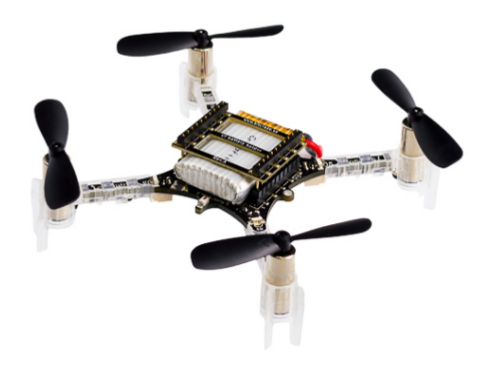
A distance measurement protocol aimed at a swarm of drones, computing
drone inter-distance over UWB and scheduling the measurements among the
drones, so the swarm can maintain its structure. A
demonstration using Crazyflie drones was
done at EWSN 2020.
Distance measurement firmware based on the SPANK
protocol, targeting the DWM1001 development board but easily portable to
other hardware embedding a DW1000 chip. Various information can be
accessed and configured from a UART console (through the USB port), and
the firmware can also be interfaced with another subsystem over I2C.
Imports GTFS files into a database for further manipulation: agencies,
routes, trips, stops and stop times, fares, calendars and their
exceptions, transfers, frequencies and route shapes.
See the fourteen tables the import populates
Tables created and filled by a GTFS import
Table
Description
provider
information about the imported file
stop_times
times a vehicle arrives at and departs from stops, for each trip
stops
stops where vehicles pick up or drop off riders
agency
transit agencies with service represented in the dataset
calendar
service dates as a weekly schedule with start and end dates
calendar_dates
exceptions to the services defined in the calendar
fare_attributes
fare information for a transit agency's routes
fare_rules
rules applying fares to itineraries
feed_info
dataset metadata
frequencies
time between trips
routes
groups of trips shown to riders as a single service
transfers
rules for making connections at transfer points between routes
trips
sequences of stops occurring during a specific time period
shapes
rules mapping vehicle travel paths, also known as route alignments
This work was supported by the UrPolSens project funded
by LABEX IMU (ANR-10-LABX-0088) of Université de Lyon, within the program
Investissements d'Avenir (ANR-11-IDEX-0007) operated by the French
National Research Agency (ANR).
Simplifies a polyline using various methods (radial distance,
Douglas Peucker, Reumann Witkam, …). The polyline is simply an array of
points, and the caller supplies the two distance functions — point to
point, and point to line — so the library does not care what a point
looks like.
Hand it two distance lambdas and simplify a polyline
# The polyline
polyline   = [ {x: 1, y: 1}, {x: 5, y: 7}, ....., {x: 8, y: 1} ]

# The two methods to compute distance
# They also deal with the point structure (Array, Hash, ....)
dist_point = ->(a,b)    {   a,b =                [a[:x],a[:y]], [b[:x],b[:y]]
                            a,b =                Vector[*a],    Vector[*b]
                            (b - a).norm
                        }
dist_line  = ->(p, a,b) { p,a,b = [p[:x],p[:y]], [a[:x],a[:y]], [b[:x],b[:y]]
                          p,a,b = Vector[*p],    Vector[*a],    Vector[*b]
                          pa, ba = p-a, b-a
                          t      = pa.dot(ba)/ba.dot(ba)
                          (pa - t * ba).norm
                        }

# Perform simplification
ts = TrackSimplifier.new(point2point: dist_point, point2line: dist_line)
ts.radial_distance(polyline, radius)    # Radial distance
ts.reumann_witkam(polyline,  threshold) # Reumann Witkam
This work was supported by the Privamov project funded
by LABEX IMU (ANR-10-LABX-0088) of Université de Lyon, within the program
Investissements d'Avenir (ANR-11-IDEX-0007) operated by the French
National Research Agency (ANR).
DNSdoctor is intended to help solving DNS misconfigurations or
inconsistencies that are usually revealed by an increase in the latency of
applications. The DNS is a critical resource for every network
application, so it is quite important to ensure that a zone or domain name
is correctly configured in the DNS.
It is a fork of ZoneCheck
occurring at version 2.0.4 (but keeping the same developer).
The tool was initiated and developed by engineers working at
NIC France (INRIA's
service) to check the correct configuration of a zone before delegating
a domain name under .fr, and was in use until October 2003.
The second version was started from scratch by myself
(as an AFNIC
employee) at the end of 2002, emphasis was put on modularity and
extensibility; this version has now taken over the responsibility of
checking the delegation of domain under .fr
DNSdoctor screenshot
MW-CVSweb
Archived · 2012
MW-CVSweb is an extension to
MediaWiki which provides the
special page Special:CVSweb. This page allows you to browse a
CVS repository.
When developing an open source project, you generally welcome people's
contributions; the idea here is to also encourage contributions to the
website through the use of a
Wiki, and this tool
provides an integrated CVS browser to the Wiki platform. It is a port of
the cvsweb
application, to the MediaWiki platform.
MW-CVSweb screenshot
ANEP
Socket v0.5
Archived · 2000
An active network node is capable of dynamically loading and executing
programs written in a variety of languages. These programs are carried
in the payload of an active network frame. The program is executed by a
receiving node in the environment specified by ANEP. Various options can
be specified in the ANEP header, such as authentication, confidentiality,
or integrity. (from the ANEP-draft)
An implementation of ANEP on top of IPv6 (and IPv4) has been made
available, for the Linux kernel. This work was done as part of the
AMARRAGE project, when working in the RESEDAS team at
LORIA.
An md5/md5sum like program able to perform file checking.
(the standard FreeBSD md5 program is not able to perform file
checking, and the Linux md5sum program is not able to generate file
to the FreeBSD format).